POLYMETRICA Request a facility review
Polymetrica/Industry/Livestock buildings

Livestock buildings: ventilation is life support, not comfort

In a closed house a stopped fan is not an inconvenience. Temperature and humidity per house, the state of ventilation and backup power, water and feed levels, and an alert that reaches a person at three in the morning.
minutesa closed house stays safe without ventilation
up to 10 kmrange from one base station
yearsof battery life per sensor
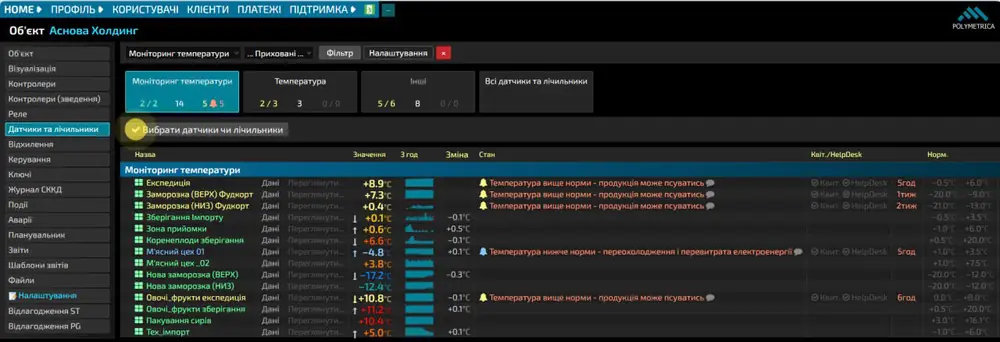
Sensors across the houses: value, 3-hour change, status and limit range
Control points

What we monitor in and around the houses

The building and the systems that keep it alive: climate, ventilation, water, levels and power. Everything that has to keep working while nobody is there.

Temperature and humidity per houseEach house and each zone with its own limit range, not one figure for the whole farm.
CO2 and air qualityWhere the air composition is regulated as well as the temperature.
VentilationFan status and confirmed running, so a stage that failed to switch is visible immediately.
Backup powerMains loss, switchover, generator start and fuel: the chain that keeps the fans turning.
Water consumptionPer house and per line. A drop in drinking is often the first sign that something is wrong.
Feed and grain silo levelsLevel and distance to the surface, without anyone climbing to look.
Fuel and liquid tanksDiesel, water and treatment chemicals across the whole facility.
Doors, gates and accessWho opened what and when, including buildings nobody visits daily.

We monitor the building and its systems, not the animals. There are no collars, ear tags or activity trackers here, and we do not do heat detection or individual health scoring. Those are a separate class of product that sits alongside this one. What we cover is the house around the herd, and the power and ventilation it depends on.

A stopped fan costs a house, not a repair

Start with ventilation, backup power and the two buildings that would be hit first.
Request a facility review
How it works in practice

Situation and system response

Situation
What the system does
What you get
A fan stage fails during the night
Ventilation status and the temperature rise are both recorded, and the duty person is alerted
Someone is there before the house is lost
Mains power drops
Switchover and the generator's actual start are monitored rather than assumed
A failed changeover is found during the outage, not after it
Water consumption falls in one house
Per-house metering shows which line changed, and when
The problem is investigated on day one
A silo runs lower than the plan
Level is charted against the delivery schedule
Feed arrives before the house runs out
Proof

Screens from live facilities

Sensors and meters: value, 3-hour change, status and limit rangeDeviations
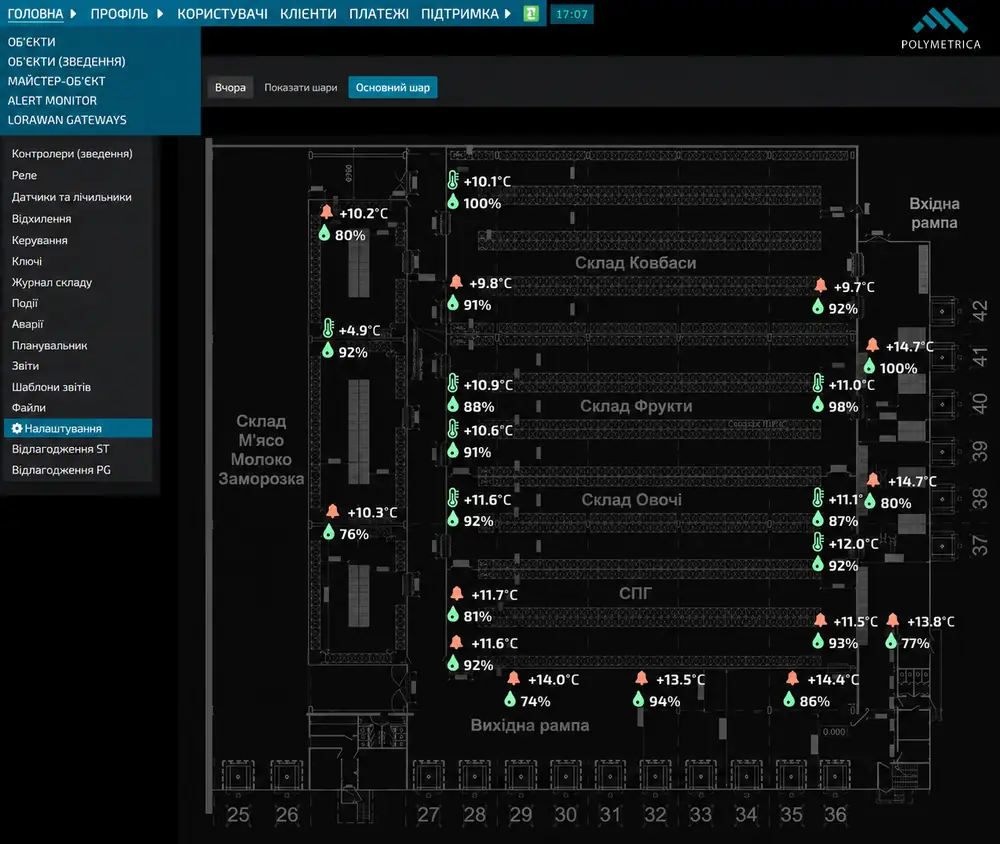
Facility view: readings for each building laid out on the planFacility plan
Already running at
pig farming and food production group agricultural holding {{TODO: descriptor for Capro Oil}}

Deployments to date are largely in Ukraine.

Rollout

From pilot to full coverage

STEP 1

Facility review

We look at what is installed, which parameters are critical and where the losses are today.

At your facility or remote
STEP 2

Pilot on 5-10 points

A gateway, sensors and meters on the riskiest zones. Installed without stopping operations.

A few hours per facility
STEP 3

Dashboards and reports

We draw up the facility plan, set the limits for each point, the alerts and the report formats.

Shaped around your processes
STEP 4

Scaling up

The same kit across the remaining zones and facilities, with a single view for the whole company.

No new approvals needed
Next step

We will work out the coverage for your buildings

Send us the layout of your houses and the distances between them. We will work out how many base stations you need and which points to cover first.

Request a facility review

Just a few lines is enough. We will prepare a preliminary estimate and an equipment list before we talk.

Name and contact are required. Everything else is optional.

Your name, then a comma, then your company. For example: Maria Santos, Acme Foods

An email address such as name@company.com. Or a phone number with the country code, starting with a plus sign, for example +44 20 7123 4567 or +49 30 1234 5678.

Where the facility is, which may not be where you are. It tells us which rules apply and who picks the enquiry up.

For example: 4 poultry houses, ventilation and a standby generator, two feed silos

We reply within one business day. We never share your details.

If the security check does not load, or you would rather not use this form, email us at sales@polymetrica.net - it reaches the same team.